
Premium 295/75R22.5 Truck Tires Wholesale: Buy Direct from a Thailand Supplier for Better Value
When it comes to keeping commercial trucks, semi-trailers, and freight fleets operating efficiently, choosing the right tires is an important business decision. Tire quality affects vehicle handling, operating costs, maintenance schedules, and overall fleet performance. For fleet owners, truck tire dealers, distributors, and importers, finding a dependable supplier at a competitive wholesale price can make a significant difference.
Request Wholesale Quote
295/75R22.5 truck tires are a popular size in commercial trucking, particularly in North American heavy-duty applications. Buyers searching for this size often need reliable products, consistent specifications, competitive bulk pricing, and a supplier capable of supporting international orders.
Thailand is an important tire manufacturing and export hub, making it a sourcing option for businesses looking to purchase commercial truck tires. By working with a Thailand-based wholesaler, buyers can explore available tire brands, compare specifications, and request quotations for bulk orders.
At ThailandTruckTires.com, we supply commercial truck tires for wholesale buyers, fleet operators, distributors, and international importers. This guide explains how to select 295/75R22.5 truck tires, what to consider when buying in bulk, and how to evaluate a supplier before placing an order.
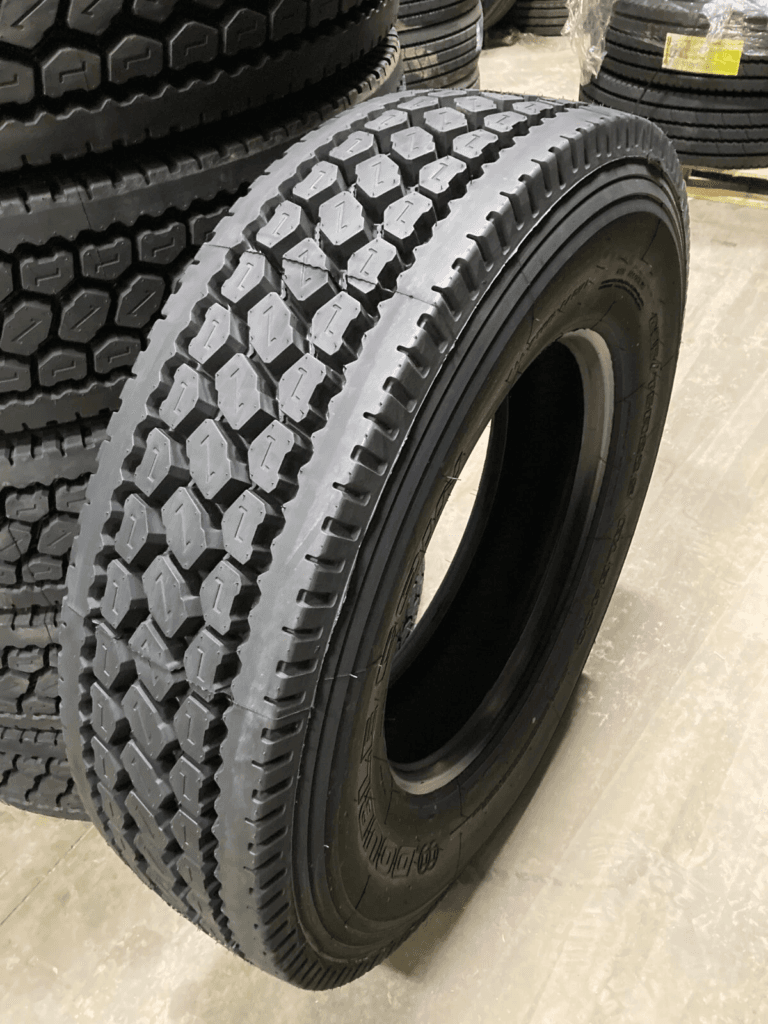
1. What Are 295/75R22.5 Truck Tires?
The 295/75R22.5 designation describes a commercial truck tire’s nominal dimensions and construction. Understanding these numbers helps buyers confirm that they are ordering the correct product for their vehicles.
Here is what each part means:
- 295: The nominal tire section width is 295 millimeters.
- 75: The aspect ratio indicates that the nominal sidewall height is 75% of the nominal section width.
- R: The tire uses radial construction.
- 22.5: The tire is designed for a wheel with a nominal 22.5-inch rim diameter.
This tire size is commonly used in heavy-duty commercial trucking, including certain semi-trucks, regional delivery vehicles, and fleet applications.
However, the tire size alone does not establish whether a tire is suitable for every truck or axle. Buyers must also check the vehicle manufacturer’s recommendations, approved rim dimensions, load index, speed rating, inflation requirements, and intended operating conditions.
For fleet managers and wholesale buyers, confirming these specifications before ordering can help prevent costly fitment mistakes.
2. Why Buy 295/75R22.5 Truck Tires Wholesale?
Purchasing truck tires wholesale can be a practical strategy for businesses that regularly replace tires or resell them to commercial customers.
Instead of purchasing individual tires from multiple retailers, buyers can request bulk quotations from a supplier and plan purchases according to their inventory needs.
Lower purchasing costs through bulk orders
Wholesale purchasing gives buyers an opportunity to negotiate pricing based on order quantity, product specifications, and shipping arrangements.
For tire distributors and retailers, competitive purchasing costs can help maintain sustainable margins. For fleet operators, buying in planned quantities may simplify budgeting and replacement scheduling.
Actual savings depend on the quoted unit price, order volume, freight costs, customs duties, insurance, and other import expenses.
More consistent product sourcing
Working with an established supplier can make it easier to coordinate repeat orders and compare the same tire models over time.
This matters for businesses that manage multiple trucks or sell tires to customers who expect consistent specifications.
Before placing a repeat order, confirm product availability, manufacturing details, and whether the same model and tread pattern can be supplied.
Convenient inventory planning
Truck tire dealers and fleet operators can use wholesale purchasing to maintain stock of frequently requested sizes.
For example, a distributor serving long-haul trucking businesses may decide to keep a selection of 295/75R22.5 steer, drive, and trailer tires, provided these products match local demand.
The right inventory mix depends on your customer base, vehicle types, replacement cycles, and available storage space.
3. Why Source Commercial Truck Tires from Thailand?
Thailand is internationally recognized for its rubber industry and tire manufacturing sector. Its established manufacturing and export infrastructure makes the country worth considering when sourcing commercial tires for overseas markets.
For international buyers, sourcing from Thailand offers an opportunity to compare products from available manufacturers and evaluate wholesale supply arrangements.
Access to tire manufacturing and export networks
Thailand has an established tire production industry and international shipping connections. Buyers can explore available commercial tire products through suppliers serving export markets.
When evaluating a supplier, ask where each tire is manufactured, which company produces it, and whether the requested model is available for export to your destination.
The country of supply and the country of manufacture are not necessarily the same, so confirm the origin of the specific product you intend to purchase.
Competitive wholesale opportunities
A Thailand-based wholesaler may offer pricing arrangements suited to importers, distributors, and fleet buyers.
However, the best supplier is not necessarily the one advertising the lowest unit price. A more useful comparison includes product quality, specification accuracy, order minimums, shipping costs, payment terms, and after-sales support.
Request a written quotation that clearly identifies the tire model and the terms of delivery.
International shipping coordination
Commercial tire importers need more than a product price. They also need to understand the shipment process, documentation requirements, estimated transit time, and responsibilities for freight and customs clearance.
Before ordering, confirm the departure port, destination port or delivery location, shipping method, estimated dispatch date, and applicable Incoterms.
These details help you estimate the total landed cost and plan inventory more accurately.
4. Choosing the Right 295/75R22.5 Tire for Your Truck
Not every 295/75R22.5 tire is designed for the same application. Tread pattern, casing construction, load specifications, and intended axle position can differ between models.
Selecting the correct type is essential for safe and effective operation.
Steer tires
Steer tires are designed for steering axles and place particular emphasis on handling, directional stability, and predictable road contact.
Fleet operators should consider the vehicle’s steering requirements, expected mileage, road conditions, and the tire manufacturer’s recommendations.
When buying steer tires wholesale, verify the model’s intended application and load and speed ratings rather than relying on the size alone.
Drive tires
Drive tires are designed for powered axles, where traction and torque transfer are important.
Their tread patterns may feature grooves and blocks intended to provide grip under different operating conditions.
Buyers should evaluate the tire according to the truck’s route, typical load, road surface, and operating environment. Long-haul highway vehicles may require different tread characteristics from vehicles operating on mixed or rougher roads.
Explore our 295/75R22.5 drive tires to review the available product information.
Trailer tires
Trailer tires are designed for trailer axle applications, where load support, rolling resistance, and resistance to irregular wear can be important considerations.
The correct tire depends on the trailer’s specifications, axle loading, wheel compatibility, and operating conditions.
Do not assume that a steer, drive, and trailer tire are interchangeable simply because they share the same nominal size.
All-position tires
Some commercial tires are approved for multiple axle positions. These can be useful in particular fleet configurations, but their suitability must be confirmed through the manufacturer’s application guidance.
Always request the exact model specification before purchasing large quantities.
5. Important Specifications to Check Before Ordering
A competitive wholesale price is only useful if the tire meets your requirements.
Before ordering 295/75R22.5 truck tires, check the following specifications.
Load index and load range: These indicate important aspects of the tire’s load capability. Confirm that the selected tire meets the vehicle’s requirements for single or dual fitment and the intended operating conditions.
Speed rating: Verify the tire’s approved speed rating against the vehicle manufacturer’s requirements and the planned operating conditions.
Tread pattern: Compare steer, drive, trailer, and other approved applications to ensure the pattern is suitable for the intended axle.
Tread depth: Different models may offer different tread depths. Compare manufacturer specifications when evaluating expected service life and application suitability.
Construction and casing: Ask about the tire’s construction, casing specifications, and whether retreading is permitted under the manufacturer’s guidance and applicable regulations.
Production information: Request manufacturing date information and relevant traceability details. Establish how product age and storage condition will be verified before shipment.
Market compliance: Confirm the applicable safety standards, certification documents, labeling, and import requirements for your destination market.
A professional supplier should be able to provide the relevant specifications for the actual model being quoted.
6. How Much Do 295/75R22.5 Truck Tires Cost Wholesale?
The price of 295/75R22.5 truck tires varies according to brand, model, tire construction, load specifications, tread pattern, order quantity, and shipping destination.
For this reason, buyers should request a quotation based on their actual requirements rather than relying on a single advertised price.
Several factors influence wholesale tire costs.
Brand and model
Different manufacturers and product lines offer different specifications and price points. A premium product may have a higher purchase price, but its value should be evaluated against its intended application, durability evidence, and total operating cost.
Compare equivalent models wherever possible.
Order quantity
The number of tires ordered can affect the unit price and the shipping arrangement. Importers ordering a full container may have different cost options from businesses purchasing a smaller mixed shipment.
Ask whether minimum order quantities apply and whether different tire models or sizes can be combined in one shipment.
Freight and import expenses
The purchase price is only one component of the final cost.
Your total landed cost may include:
- Tire purchase price.
- Inland transportation in Thailand.
- Export handling and documentation.
- Ocean freight and cargo insurance.
- Customs duties, taxes, and clearance fees.
- Port handling and transportation to your warehouse.
The exact charges depend on the destination and agreed shipping terms.
How to compare quotations
Request quotations from suppliers using the same product specifications and delivery terms.
Compare the final landed cost per tire rather than only the factory or wholesale price. Also evaluate lead times, payment conditions, product documentation, and the supplier’s ability to support repeat orders.
This approach provides a more reliable basis for choosing a long-term supplier.
7. How to Buy 295/75R22.5 Truck Tires Direct from a Thailand Wholesaler
Importing truck tires can become more straightforward when you prepare your purchasing requirements before requesting a quote.
Follow these steps to improve the buying process.
Step 1: Confirm your tire requirements
Identify the required size, axle position, brand preference, load index, load range, and other relevant specifications.
If you are replacing tires already fitted to your vehicles, use the vehicle manufacturer’s guidance and the existing tire information as a starting point.
Step 2: Determine your order quantity
Estimate your immediate requirements and expected demand over the next replacement cycle.
Fleet operators should consider their maintenance schedule, while distributors should review customer demand and inventory turnover.
Avoid ordering more stock than you can reasonably store, finance, and sell.
Step 3: Request a detailed wholesale quotation
Send the supplier your required quantity, preferred tire models, destination country, and delivery preferences.
Ask for the unit price, minimum order quantity, lead time, shipping options, and relevant product documentation.
A detailed request makes it easier to receive an accurate quotation.
Step 4: Verify product specifications
Review the technical information and confirm that the offered tire matches your requirements.
Ask for clarification if the quotation does not identify the precise model, axle application, load specifications, or country of origin.
Step 5: Confirm shipment and payment terms
Agree on the delivery terms, payment schedule, documentation, and estimated shipping arrangements before paying.
For international transactions, make sure the responsibilities of the buyer and seller are clearly documented.
Step 6: Plan for repeat purchasing
Once you have evaluated the product and supplier, maintain records of the tire model, specifications, shipment details, and performance feedback.
These records can help your business compare future orders and manage inventory more efficiently.
8. How to Calculate the Real Value of Wholesale Truck Tires
The cheapest tire is not always the most economical choice. Fleet owners should evaluate purchase price alongside mileage, fuel consumption, maintenance, downtime, and replacement frequency.
One useful starting point is cost per kilometer or mile.
For example, suppose two tire options have the following illustrative figures:
- Tire A costs $250 and delivers 100,000 kilometers.
- Tire B costs $290 and delivers 125,000 kilometers.
The purchase-price cost per kilometer would be:
- Tire A: $250 ÷ 100,000 = $0.0025 per kilometer.
- Tire B: $290 ÷ 125,000 = $0.00232 per kilometer.
In this hypothetical example, Tire B has a lower purchase-price cost per kilometer despite its higher initial price.
These figures are illustrations, not performance claims about any particular tire model. Actual results depend on route conditions, loading, inflation pressure, maintenance, driving behavior, and other operating factors.
For a more complete comparison, fleets should also consider fuel consumption, casing value where applicable, maintenance costs, and downtime.
When evaluating 295/75R22.5 tires, request reliable product information and compare equivalent applications under similar operating conditions.
9. Common Mistakes to Avoid When Buying Truck Tires in Bulk
Wholesale buyers can reduce purchasing risks by avoiding several common mistakes.
Choosing by price alone. A low quotation does not automatically mean better value. Compare technical specifications, product origin, shipping costs, and the supplier’s ability to provide the required documentation.
Ignoring axle position. Steer, drive, and trailer applications have different requirements. Confirm the correct application before ordering.
Assuming similar tire sizes are interchangeable. Even tires with similar dimensions may differ in approved rim widths, load ratings, overall diameter, and other important characteristics. Follow the vehicle manufacturer’s recommendations.
Overlooking import regulations. Verify the rules that apply to commercial tires in your destination country, including applicable certification, labeling, and customs requirements.
Failing to calculate landed cost. Freight, duties, taxes, and local delivery can materially change the economics of an order.
Ordering without checking stock. Confirm actual availability, production information, and dispatch estimates before making payment arrangements.
Neglecting storage and maintenance. Tires should be stored and maintained according to the manufacturer’s recommendations. Appropriate storage, inflation, alignment, and regular inspections can support tire service life and safe operation.
A careful purchasing process helps protect your budget while ensuring that the products you receive meet your fleet’s requirements.
10. Why Choose ThailandTruckTires.com for 295/75R22.5 Tires?
ThailandTruckTires.com serves buyers looking for commercial truck tires, including fleet operators, tire dealers, distributors, and international importers.
Our website provides a starting point for businesses seeking 295/75R22.5 truck tires and other commercial tire sizes.
When sourcing tires for your business, you can contact our team to discuss your required size, preferred application, order volume, and delivery destination.
We encourage buyers to confirm current stock, exact product specifications, available brands, shipping options, and quotation terms before placing an order.
Whether you are sourcing tires for a commercial fleet or purchasing inventory for resale, identifying the correct product and obtaining a clear wholesale quotation are important first steps.
You can explore our 295/75R22.5 truck tires for sale to review the available product information.
If you need other commercial sizes, visit our commercial truck tires range to explore additional options.
Frequently Asked Questions About 295/75R22.5 Truck Tires
Are 295/75R22.5 tires suitable for semi-trucks?
They are used in many commercial trucking applications, including certain semi-trucks. However, suitability depends on the vehicle’s approved tire size, axle position, load requirements, rim compatibility, and operating conditions.
Always confirm the required specifications before purchasing.
Can I buy 295/75R22.5 tires in bulk from Thailand?
Yes, international buyers can request wholesale quotations from Thailand-based suppliers. Availability, minimum order quantities, product origin, and shipping arrangements vary by supplier and tire model.
Contact the supplier with your required quantity and destination to obtain a quotation.
What is the difference between steer, drive, and trailer tires?
Steer tires are designed for steering axles, drive tires for powered axles, and trailer tires for trailer applications. Their tread patterns and performance priorities may differ.
Select the tire according to the manufacturer’s application recommendations and the requirements of your vehicle.
How do I get the best wholesale price?
Provide the supplier with your tire size, exact specifications, order quantity, destination country, and preferred delivery terms. Compare quotations using equivalent products and calculate the total landed cost.
Do you ship 295/75R22.5 tires internationally?
ThailandTruckTires.com serves international buyers. Contact the team to confirm whether your destination is supported, along with available shipping methods, costs, lead times, and import documentation.
What information should I provide when requesting a quote?
Include the following details:
- Tire size: 295/75R22.5.
- Required axle position: steer, drive, trailer, or another approved application.
- Preferred brand or model, if applicable.
- Required quantity.
- Destination country and delivery location.
- Required technical specifications and documentation.
- Preferred delivery timeframe.
Providing these details helps the supplier prepare a more relevant quotation.
Conclusion: Source 295/75R22.5 Truck Tires from Thailand
Choosing the right commercial truck tires requires more than comparing prices. Buyers need to consider fitment, load requirements, axle application, product specifications, shipping expenses, and long-term operating value.
For fleet managers, distributors, importers, and tire dealers, purchasing 295/75R22.5 truck tires wholesale can be an effective way to plan inventory and source products for commercial trucking operations.
Thailand offers an established tire manufacturing and export industry, making it a sourcing option worth evaluating when comparing international suppliers.
Before placing an order, confirm the precise tire model, product origin, specifications, available quantity, shipping terms, and total landed cost.
Looking for 295/75R22.5 truck tires at wholesale prices? Visit ThailandTruckTires.com to explore the available products and contact our team for a quotation based on your requirements.
Whether you are purchasing for a fleet, dealership, distribution business, or import operation, we can help you take the next step toward finding a suitable commercial tire supply option from Thailand.